Jun 9, 2025
“The hard part won’t be the vision; it will be the change it requires.”
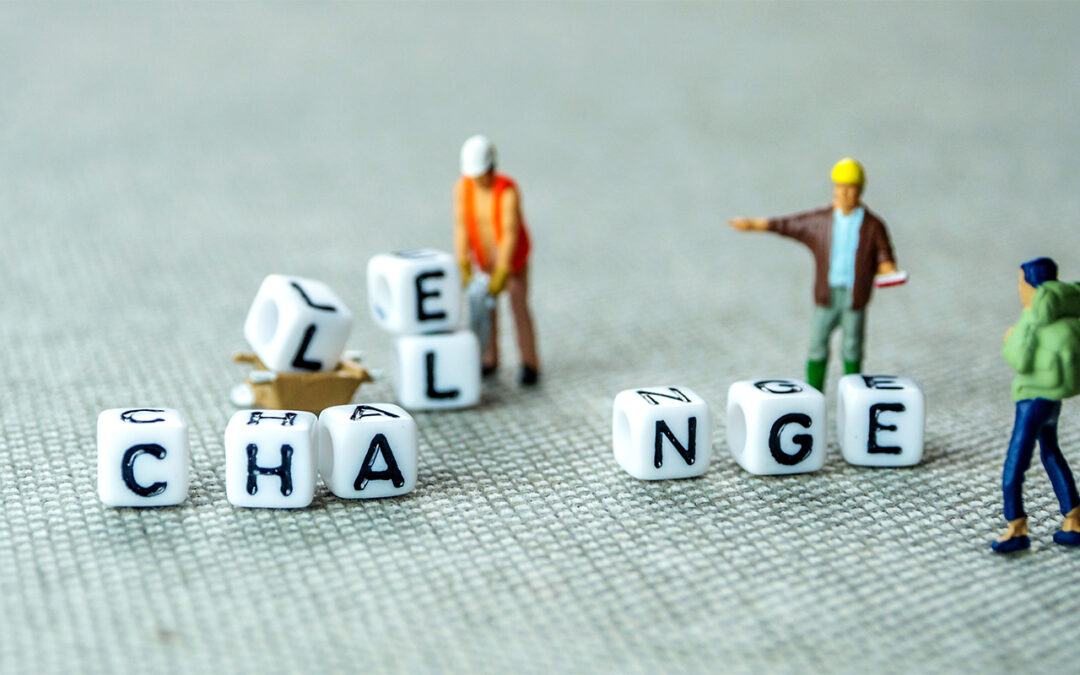
Change. I have always heard, in general, people do not like change, or do they fear change? Either way, I have a problem with that premise. I believe people are OK with change. It is just that they do not like or fear the various things that can come with change. Like learning new behaviors, being judged, fearing failure, falling short, etc. I believe most difficulties with change involve how we see ourselves or how we are seen in change. It is not change – it is our place in it.
Over time, I have learned that change will be what it is, to make what needs to happen, happen. Leadership guru John Maxwell famously said, “Change is Inevitable; Growth is optional.” I find change is more than inevitable; it is necessary. It is essential for our growth, and more often than not, it happens naturally.
We cannot not change.
Brad Stulberg, in his book Master of Change, states that there are two constants in our lives. One is that we age. Trust me when I say we are different from what we were yesterday. We see gradual physical change over time. However, regardless of how old we are, we create our own realities with our choices. Nevertheless, you and I are aging, one day at a time.
Second, Stulberg speaks of what he calls disorder events. Every 18 months or so, we, as research suggests, go through some disorder event. Not good things or bad things specifically…all things. They are events that require us to make some alteration, adjustment, variation, switch, or modification to what we are doing or how we do it. I would not necessarily call them life-changing events as much as I would call them pivotal events when we need to embrace what is in front of us.
Life’s fluidity, or flux, is real, and when we accept it, it can be empowering. When we accept change and how it challenges us, we move into a posture of letting it cultivate who we are and who we are becoming. We allow change to be our hinge for growth. Then, we develop a rugged flexibility and resiliency that is a chance for a new way to be ‘better’ no matter what we face. This can lead to better performance and productivity because when we see change as neutral, or naturally being what it will be, it becomes less about the circumstances and more about how we respond.
Change management would be easy if it weren’t for the change part.

Change, and more importantly, managing change becomes a series of choices. Step one represents acceptance. Accepting change as inevitable, cyclical, and necessary. Personal and professional. Big and small. Important and routine. Urgent and slow burn. We accept that no matter how the factors of “what, why, how, when, who, how much, how often, how long, or to what extent” play in change…change is going to happen.
The second step will always be the space between acceptance and action. It is where we place our intentions, outlook and attitude. It is about how we see and own our commitment to change. Our real commitment. Not the one that sounds good. The place and space where our grit, determination and resilience are tested as accelerants into action.
The third is to act. To do whatever it is right away without overthinking it. My advocation is always, start small. Then, a quick pause and reflection. Question the current action and behaviors…is it working? If it is working, keep at it. If not, pivot.
Ahh, but when is the best time to change?
I have found that it’s not the size of change that really matters. What really matters is the size of our response, especially the size of our acceptance, intention, and action.
Maybe the best time is when we are fully ready to start. I have researched and found four interesting considerations. One, when we hurt enough, we have to. This is about resiliency. It is one thing to say, “Knocked down seven times, get up eight.” Well, it is got to be in the eighth time where we decide, “I’m sick and tired of being sick and tired.” OR said another way, “Enough, I need to change.” Desperation drives us.
Two, when we see enough, we are inspired to. This second one is about being provoked in our thinking and doing. Something done, said, or lived out gives us an example of what change can look like and be like. That influences or triggers our motivation for change. Inspiration sparks us.
Three, when we learn enough, we want to. This is about competency. Our capacity to learn, know, and grow forward into change. That our ability to cognitively and logically process the things that need to change, the behavior that gets us there, and the follow-through to maintain our momentum. Understanding directs us.
Four, when we receive enough, we get to. Lastly, whether it seems like it or not, change can also flow out of a “others’ first” point of view. To change as a benefit to others and leveraging what we have in the service of others. Putting others first stimulates us.
Change is hard. Or at least, that’s how we see it. Hard is relative.
What if you and I saw change as an awesome, amazing, fruitful opportunity to do things better and be a better person. To not see it so much as hard, as simply challenging. Because it takes time, and it does not just happen without focus, work, discipline, and dedication. Slow down, pause, and then re-consider the point from above…make change happen in small steps.
There is an old saying, “How do you eat an elephant?” One bite at a time. “How do you eat a herd of elephants?” One bite at a time. Consider that today. We have talked about scale not being bigger than our intention. Maybe the simplest way to get change squared away is in one small step at a time. For two reasons. One, picking one thing makes it do-able, and it creates a singular manageable way to work through change. And two, getting one win builds momentum and the confidence to do more and more. One thing at a time, one bite at a time.
Taking all this into account, my last bit of advice is to not fear change because of the possibility of failing, fear not changing and staying the same. But then again, change is inevitable. Change will happen to you or through you, and you get to choose the pathway.
Consider the following questions and how your answers have the possibility to shape all the next steps.
- First off, how do you define change?
- What do you fear most in change? What do you appreciate the most about change?
- Think about one of your past changes, what happened? What did you learn?
- What are some triggers or motivators for you to change?
- How would you describe your behavior(s) in change?
- How do you typically measure success (or failure) in change?
Want to learn more perspectives about change? Visit our podcast or one of our locations.

May 29, 2025
Verizon Home Internet is the Best Internet for Working Remote in 2025. Tired of laggy meetings? With fast download speeds and whole home accessibility, Verizon has you covered. If you have a family member streaming in the other room, you will not even notice during your conference call. Along with that, Verizon is offering a price lock guarantee with all internet plans and discounts on the most popular streaming platforms such as Disney, Netflix and Max. Easily customize your plan with the right Perks for you.
Verizon is currently working on new ways to offer fast home internet. Right now, Verizon has 5G home internet available all over the country, and you can check if it is available at your address. If it is not available where you are located, you can sign up for updates from Verizon to be the first to know when it is. There are also other options for Verizon Home Internet you can check such as LTE, FIOS, and Regular Home Internet. All of these options are the Best Internet for Working Remote with affordable pricing.
Is Verizon Home Internet the Best Internet for Working Remote?
Verizon’s 5G Home Internet plans range from 85-Mbps up to 1000-Mbps depending on your household needs. So, you can quickly download or upload projects and documents to your co-workers without hassle. If you are needing internet that is even faster, check out Verizon’s Fios internet options. This internet provides the fastest possible using Fiber Optic cables. Overall, with the variety of Verizon’s Internet options partnered with perks and a guaranteed price lock of up to 5-years, makes it the Best Internet for Working Remote.
Verizon Home Internet vs. T-Mobile & AT&T
The only other competitor with Verizon’s 5G Home Internet is T-Mobile. While T-Mobile does have greater accessibility, Verizon’s service is faster and cheaper, offering a 50% discount to existing mobile customers along with perks and a 5-year price lock. T-Mobile’s base price is $60/month and Verizon’s starting at $35. As far as 5G Internet goes, Verizon is easily the Best Internet for Working Remote.
How about Verizon’s Fios Internet option though? Both Verizon and AT&T both offer Fios internet options. Verizon’s plans start at $35 up to $120/month while AT&T starts at $55 up to $250/month. Alongside that, Verizon offers deals for being a mobile customer which can lower their top service to just $95/month. As mentioned before, Verizon offers up to a 5-year price lock, so your rate would not go up like AT&T’s service does every year. Making Verizon the Best Internet for Remote Work.
Moving and Need Internet Service Fast?
Verizon Home Device Protect is a must have for customers who are moving and need internet for Working Remote. When you already have Verizon Home Internet you can get a $0 professional home tech installation or for just $49 if you do not. On average, the cost to have a TV mounted is $255, but with Verizon Home Device Protect, it is still just $49, that’s over $200 in savings! On top of that, Verizon Home Device Protect can install any of your eligible technology professionally!
Can I get Verizon Home Internet without having a Mobile Plan?
If you are just seeking to switch Internet providers to not only receive faster speeds, but to also save money, Verizon Home Internet is the option for you. With that, you do not need to be an existing Verizon customer to sign up for their internet. Verizon also commonly offers up to $500 to help break your previous internet contract so you do not have to worry about big fees when switching. However, if you decide to switch to Verizon’s mobile service as well, you can receive unique benefits to help you save money on everything including steaming services, internet service, phone cost, and more.

May 13, 2025
Verizon Home Internet is the Best Internet for Gaming in 2025. With fast download speeds and whole home accessibility, Verizon has you covered. You can stream in one room, while gaming in the other without lag. Along with that, Verizon is offering a price lock guarantee with all internet plans and discounts on the most popular streaming platforms such as Disney, Netflix and Max. Easily customize your plan with the right Perks for you.
Verizon is currently working on new ways to offer fast home internet. Right now, Verizon has 5G home internet available all over the country, and you can check if it is available at your address. If it is not available where you are located, you can sign up for updates from Verizon to be the first to know when it is. There are also other options for Verizon Home Internet you can check such as LTE and Regular Home Internet. All of these options are the Best Internet for Gaming with affordable pricing.
Is Verizon Home Internet the Best Internet for Gaming?
Verizon’s 5G Home Internet plans range from 85-Mbps up to 1000-Mbps depending on your household needs. Along with that, the 5G Internet is designed for low latency providing speeds lower than 30-ms. If you are needing internet that is even faster, check out Verizon’s Fios internet options. This internet provides the fastest possible using Fiber Optic cables. Overall, with the variety of Verizon’s Internet options partnered with perks and a guaranteed price lock of up to 5-years, makes it the Best Internet for Gaming.
Verizon Home Internet vs. T-Mobile & AT&T
The only other competitor with Verizon’s 5G Home Internet is T-Mobile. While T-Mobile does have greater accessibility, Verizon’s service is faster and cheaper, offering a 50% discount to existing mobile customers along with perks and a 5-year price lock. T-Mobile’s 5G Internet speeds typically range from 72-mbps up to 245-mbps, while Verizon offers 85-mbps up to 1000-mbps. While T-Mobile’s base price is $60/month and Verizon’s starting at $35. As far as 5G Internet goes, Verizon is easily the Best Internet for Gaming.
How about Verizon’s Fios Internet option though? Both Verizon and AT&T both offer Fios internet options. Verizon ranging from 300-mbps up to 2,000-mbps while AT&T offers 300-mbps up to 5,000-mbps. Both services use the fastest internet networks possible for the lowest latency. However, Verizon’s plans start at $35 up to $120/month while AT&T starts at $55 up to $250/month. So, with these numbers Verizon sells their internet for $0.06/megabytes down and AT&T for $0.05/megabytes down. However, Verizon offers deals for being a mobile customer which can lower their top service to just $95/month. This would lower it to just $0.04/megabytes down and potentially lower with other deals. Along with that, Verizon offers up to a 5-year price lock, so your rate would not go up like AT&T’s service does every year. Making Verizon the Best Internet for Gaming.
Can I get Verizon Home Internet without having a Mobile Plan?
If you are just seeking to switch Internet providers to not only receive faster speeds, but to also save money, Verizon Home Internet is the option for you. With that, you do not need to be an existing Verizon customer to sign up for their internet. Verizon also commonly offers up to $500 to help break your previous internet contract so you do not have to worry about big fees when switching. However, if you decide to switch to Verizon’s mobile service as well, you can receive unique benefits to help you save money on everything including steaming services, internet service, phone cost, and more.

Apr 29, 2025
How do you Perceive Effective Sales Tools and Resources in Retail?
Selling has existed throughout human existence. Way back in the day, someone was selling something to someone. At first, it was the stuff of life, and it may have been less selling and more bartering for goods. As communities, villages, towns, and cities sprang up, some types of currency developed, and people needed stuff; some created a marketplace for goods and services. Then came expansion, and the goal was to create new trade routes and for some kings or queens to invest in the business adventure. From then till now, the zeitgeist through the ages and all the socio-economic technological changes have impacted how we sell, buy, and use effective sales tools and resources in retail.
Past and present, a salesperson has always needed some type of tool or resource to help a customer with their buying decision. They needed something, somewhere, or some way to get their point across, position the goods or services in a beneficial light, and help make the process as pleasing and seamless as possible for the customer to say “yes.”
Tools and Resources are…

A simple definition would relate to anything that helps salespeople close sales most effectively. Because the possibilities for defining a tool and resource are so widespread, I have always combined them and called them elements in an effective and efficient Retail Ecosystem.
This represents all the things that can impact sales enablement and engagement. These are software applications and other digital platforms that sales teams use to streamline their workflow, affect transactions, manage customer relationships, track sales progress, analyze data, and so on. It is showroom merchandising, inventory management, marketing platforms, sales support systems, and materials. It is everything on hand that can be leveraged to help sales reps sell and make it easy for customers to buy.
The Greatest Tool and Resource is People.
The thing is, you can have the best, most effective and efficient systems, tools and resources in place, but they will only be so when you add people to the equation. None of those things matter until a person interacts with another person.
Which then means a critical element in the systems, tools and resource library is training and development. People are not effective and efficient until they fully know and understand what they do and how they do it. It’s clarifying the “what, why, how and to what extent” they have at their disposal to sell and sell well.
And just knowing and understanding is not enough. They must leverage these systems, tools and resources in every selling opportunity, realizing that every customer and every situation is unique and will require a certain amount of adaptability and flexibility.
This Ultimately Defines the Art and Science of Selling.

Science represents the systems, tools and resources that aid the selling experience, and art represents the way we, the salespeople, use them to create the selling experience.
I have learned over time, in selling, conditions dictate approach and challenge how we make our decisions in an ever-changing sales environment, constantly evolving market and industry, and diverse customer wants, needs, and reality.
It also reminds me of an old saying, “Sell what you have today”. I have come to understand this is more than just product and service availability. It’s also about being truly improvised in our selling mindset and skillset to accomplish our sales goals.
I’m not sure who said this, “Do not wait; the time will never be ‘just right.’ Start where you stand, work with whatever tools you may have at your command, and better tools will be found as you go along.” This quote emphasizes that salespeople shouldn’t wait for perfect tools to begin selling but should utilize what they have and continuously improve as they learn and adapt. In other words, it is people and their actions that present the most effective and efficient tool and resource.
People Helping People get what they need.

The processes that make up our ecosystem are important. They have meaning and purpose. The people, using what they have at their disposal to provide solutions for the customer, also have meaning and purpose. Just like the sales rep and the customer, in retail, you can’t have one without the other.
For the last time, as an individual or sales team, consider the following questions and how your answers have the possibility to shape all the next steps.
- Define all the types of tools and resources you have on hand…what are they?
- How do the tools and resources benefit you? How do they benefit the customer?
- Think of the selling steps, which tools and resources best apply to each step?
- How do you typically use the tools and resources?
- What is a challenge in leveraging your tools and resources?
- Knowing what you know, which of your tools and resources need some attention?
Want to learn more perspectives about effective sales tools and resources in retail? Visit our podcast or one of our locations.

Apr 1, 2025
How do you Perceive Good Customer Service?
One of my favorite quotes about customer experience is from Stanley Marcus of Neiman Marcus. He said, and I paraphrase as best as I can remember, “The hardest part of customer service is the customer. They’re not always right, but they’re always the customer.”
In part one last month, we explored sales and selling. Specifically, how our behaviors as sales reps help customers buy goods and services. The sales interaction represents a two-sided coin. On one side, the sales rep, skilled in the art and science of selling. Flip it over. On the other side, the customer, driven by purpose, on purpose, for purpose to buy stuff.
Customers are…

A simple working definition is customers are people who buy goods and services, and in doing so, supply revenue to the organization. Organizations can have a vision to provide amazing goods and services by the best people possible, but none of that matters unless someone shows up. And when they do, a few things immediately stand out.
First off, customers don’t just show up, they have a purpose for showing up. They made the choice to let whoever is in the store – maybe they know each other, maybe not – to serve them. Second, regardless of how they show up; ready to buy, inquisitive about something they need or upset about something that may have happened…they are giving us a chance because they need us as much as we need them. Lastly and most importantly, our goal is to meet them where they are, not where we are.
Everything is too expensive.
That is, until value has been established. Regardless of what the customer’s buying…it doesn’t matter what…it’s all expensive until the value (desire, need, solution) becomes greater than the price of the thing. When the “want” becomes greater than the “wallet”.
In selling, figuring out the balancing act of price and value is all about discovery. To figure out what’s driving the customer’s wants, needs, desires, and solutions. We then align that information with the information we have about the goods and services that make up the best options.
I have found that customers don’t buy so much what the stuff has (features), they buy what the stuff does (benefits). That cause-effect relationship is driven by our ability to know enough about the product to make the connection of value to and for the customer.
“Value is not determined by those who set the price. Value is determined by those who choose to pay it.”

Simon Sinek perfectly sums up the correct point of view and then directs our goal of discovery. To figure out the customers perspective and create a “value bucket”. To discover what’s driving the customer’s decision making and then put things in that bucket.
It begs the question, what are things that can add value?
It depends and it varies. One of the first key components in adding value is brand, or company perception. Specifically, how an organization is seen as having a positive reputation for delivering excellent service and known for the best wireless experience, caring community engagement and best in class products.
Another component is the quality of the retail ecosystem. How we do what we do in our stores and with our call centers with a focus on finding the right solution for the customer. Providing personalized care within a seamless process making it easier for customers to buy our goods and services.
And lastly, a tremendously valuable component, the people who sell and support selling. The greatest asset of any business is its people, and it’s the front-line team members who represent the drivers for adding to the value bucket. Seen each day in how we interact and care for every person. This represents our outlook, mindset, passion, and purpose in what we do and how we do it. With every customer, when we deliver our best self, we demonstrate the ultimate quality customer experience.
I’ll end with this…
If selling is what we do to achieve sales, then the price is what customers are willing to pay to enjoy the value in the thing they buy. Customers buy as a result of the sales rep selling. We need both sides of the coin. Which side needs your attention?
Just like last month, as an individual or sales team, consider the following questions and how your answers have the possibility to shape all the next steps.
- Define Customer…what does this mean?
- What are the different types of customers? What does each need from you?
- Does personality play a part in selling? How does that factor with each type of customer?
- Think about all aspects of the retail experience and interaction, what creates value?
- How do you create value with your customers?
- To what extent will you make that happen with every customer, every time?
- Same question from last month, would you buy stuff from you? Why or why not?
Want to learn more perspectives about how to give good customer service? Visit our podcast or one of our locations.