

I’ve got a deadline.
Ever have a distinct deadline? The time when we had to complete something targeted by a certain date in a week or month. Even writing this, I typically must get my blog article done by the last day of the month, so that the marketing team can post it on the first Monday of the next month.
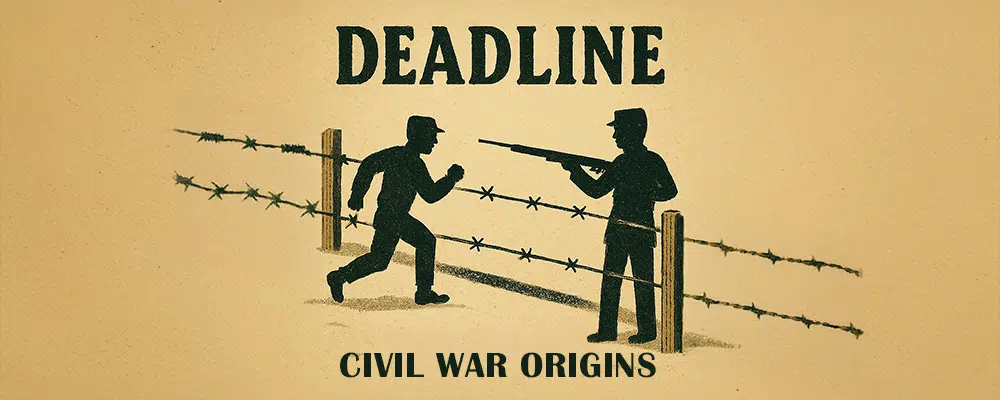
The word ‘Deadline’ seems overtly harsh. If you look at the origin of the word, it makes sense. It originated during the American Civil War, specifically at the infamous confederate Andersonville prison. You see, there was a boundary line that wrapped around the prison camp…part literal, part figurative…and if any prisoner crossed over that line, they would be shot. Hence, the “dead line”.
Therefore, it is no wonder why there can be perceived unease and anxiety associated with getting close to any deadline. It can even spark fear of not making the date. We can ‘sweat’ getting things done with a deadline, by a deadline, under a deadline, or past a deadline.
Does every plan require a deadline?
If we are discussing certain specific projects or initiatives, then yes. Some plans have fixed, rigid deadlines with exact structure, time-sensitivity, or potential expectations from others or for others. Some do not. In fact, some of the most common this time of year are personal goals or self-directed goals that involve more flexible or ongoing plans without being bound by hard, unchangeable deadlines.
So, maybe the better question is “What’s the why behind my plan?”
Because whether our plan has a deadline or not, every plan starts with a reason for being. And any proposed deadline plays a part in that bigger purpose. Most plans do not require a deadline, but every plan must have a purpose.

Plans require what exactly?
Well, as aforementioned, a purpose is critical. From there, it depends on the path between where we are and where we want to go. Said another way, a desired strategic outcome (plan) will always be dictated by relative tactical means (situational and improvisational responses). The military has a name for this, Commander’s Intent. The simple meaning is that the desired objective never changes, however the means to achieve it will always be dependent on the current circumstances. In other words, plans will change based on what the leader sees in real time and as the battle variables unfold.
Plans are great until after you start.
Let’s add another consideration to Commander’s Intent. I have written about preparation before and alluded to the necessity of having a plan. I have touched on various things that go into a plan. I always recall these two quotes about plans. One from Dwight D. Eisenhower, “Plans are worthless, but planning is everything.” And the other from Mike Tyson, “Everyone has a plan until they get punched in the face.” Either one…they suggest planning is key, until you get into the thick of it. Plans become worthless once the unknown and adversity hits, and true success comes from the ability to adapt to unexpected challenges in real-time.
So, let’s be real, if you have a plan in place with a firm deadline in mind, or it’s a fluid and adaptable idea, how will you know you are there? Are you at a place you need or want to be? Obviously, having met a deadline means we met the time requirement. That is good. But what about everything else that makes up the purpose, plan, and performance? Sometimes, our mindset outpaces time and deadlines.
I wonder what was going on in the mind of the union soldier in 1864. “I understand what can happen if I cross the dead line. But the bigger thing for me is… I’m stuck in a prison camp.”

If you’re interested in creating a plan, consider the following questions.
- Reflect on a recent plan. Make note of all the components. How did it go?
- Think of a current plan – either being made or already made – Why that plan?
- What are all the ingredients for this plan?
- What is essential to complete this plan?
- Who else is involved? What and how do they contribute?
- In what ways will you track/measure progress and success?
- How will you know you have fully moved from “to-do” to “done”?
- How much time do you “really” give yourself to achieve the goal? What’s your deadline?
Want to read more? Read our other Blog Posts!